Culture
The king's gambling hall
Words Shelley
Two thousand years ago, India's great book of statecraft had rules for the gaming house. Some of them would feel familiar in a card room today.
Shelley Guest writer
/ 2 min read
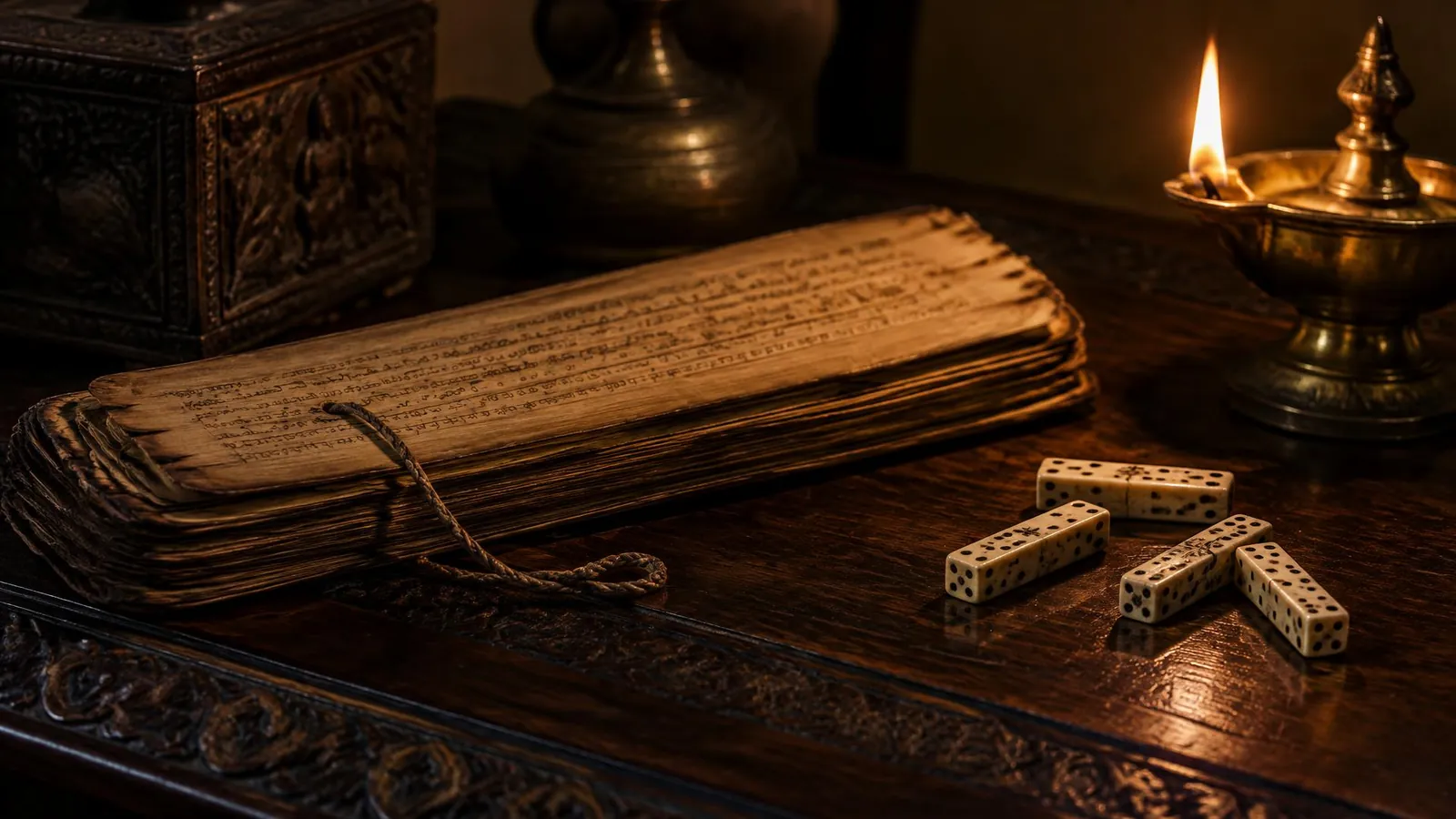
The oldest gambler's complaint in India is about three thousand years old. In a hymn of the Rigveda, a man who cannot stop playing dice speaks about it. His wife has left him, his mother-in-law hates him, and still, when the brown dice fall on the board, he goes to them "like a woman to her lover." The dice in the hymn were nuts from the vibhitaka tree, rolled in handfuls. The feeling is one any card room would recognise.
A game that cost a kingdom
The most famous game in Indian literature is a game of dice. In the Mahabharata, Yudhishthira sits down to play Shakuni, whose dice are said to obey him. He loses his wealth, then his kingdom, then his brothers, then himself, and finally Draupadi. Everything that follows in the epic, the exile and the war, begins at that board.
The story is a warning, but it is also a picture of how seriously the game was taken. It was played in halls, by kings, in front of the court.
The superintendent of gambling
A few centuries later, the Arthashastra, the great handbook of statecraft credited to Kautilya, took a more practical view. If people were going to gamble, the state would run the hall.
The book describes a superintendent of gambling. Gaming was to happen in licensed houses, not in back rooms. The house supplied the dice, so nobody could bring their own loaded set. Cheats were fined, and anyone caught swapping dice was punished. The superintendent took a cut for the treasury, and charged for the dice and the space.
Read today, it is a description of a well-run room: a known place, house equipment, clear rules, a fee for the house, and someone in charge whose job is to keep the game honest.
Why it still matters
Kautilya was not a romantic about any of this. Elsewhere in the same book he writes that a person handling money cannot help tasting a little of it, the way you cannot help tasting honey placed on your tongue. He did not ask for saints. He built checks.
The best card rooms work the same way, two thousand years later. The house supplies the cards and the chips. The rules are written down before anyone sits. Someone is responsible for the game, and everyone can see who that is.
The dice have changed. The ideas behind a fair room have not.
Every Friday
The Friday mail
One email a week. The best new stories, the tournaments coming up, and the rooms worth the trip.
Keep reading

Culture
Why Suited?
A letter from the editor: why the game deserves a magazine, and what you will find here.
Nikkhil Mannocha
Culture
Cards on Diwali night
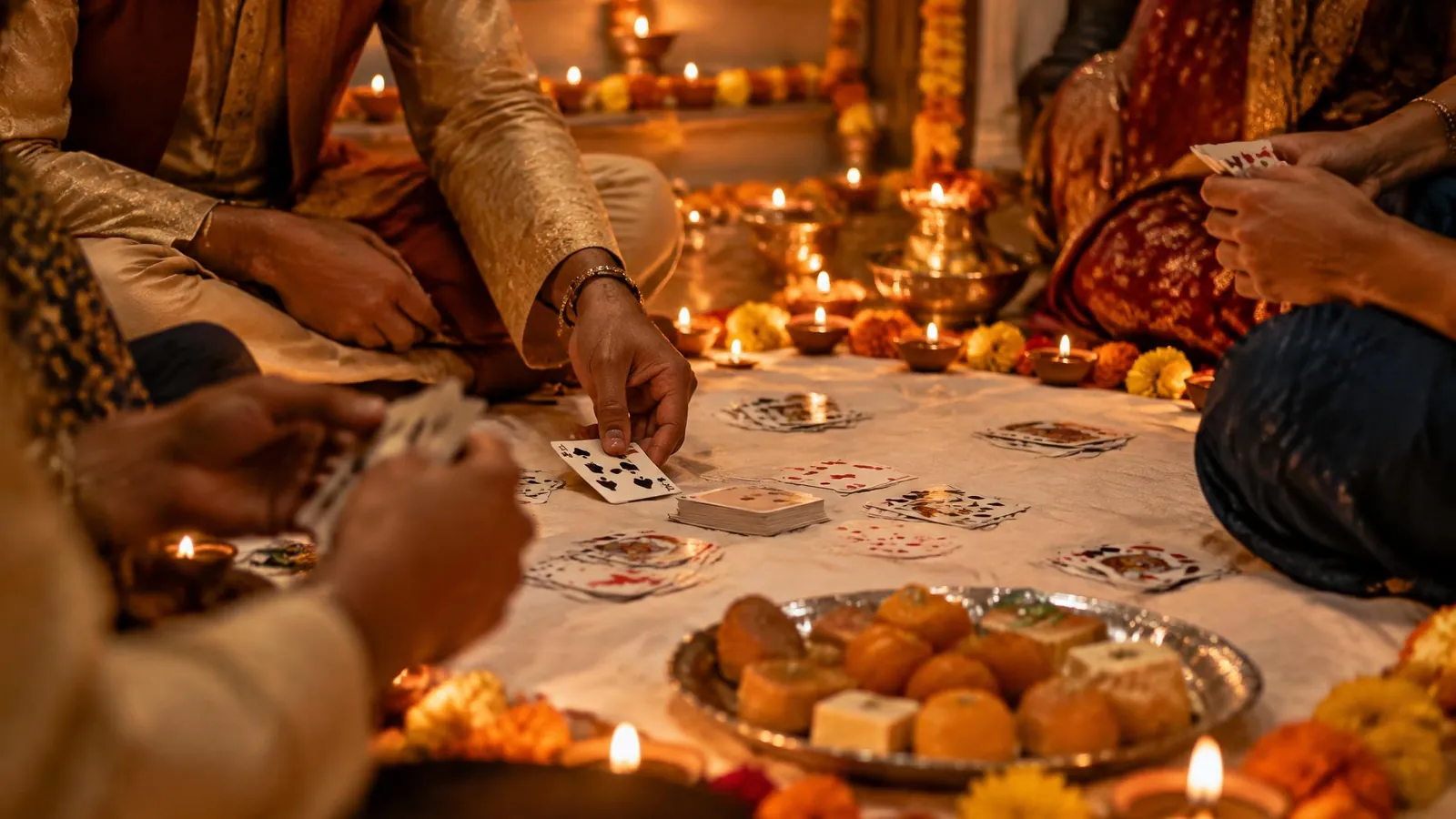
Lamps on the balcony, sweets on a steel plate and a deck on the floor. Why the festival of lights is also India's biggest night for cards.
Divya

People
Ten years at the table in Toronto
He left home games with friends for a nine-table club in Toronto. In his own words: what surprised him, what he misses, and the one outer he still remembers.
Nikkhil Mannocha